Showing posts with label Racing. Show all posts

17 November, 2011

Canadian Ski Mountaineering Race Calendar

Winter's here, most people have been outside playing in the snow, and training their faces off for some great Ski Mountaineering Racing.  Here's what you've waited for, should be another great season!

Vert 180 - COP, Calgary, AB
Date:  Dec 3rd, 2011
Format:  Maximum Vertical
Website:  http://vert180.blogspot.com/

ISMF North American Championships - Crested Butte, Colorado, USA
Date:  Jan 28th, 2012
Format:  Individual
Website:  http://www.ussma.org/race/cosmic/2012-01-27/2012-north-american-championships

Dogtooth Dash - Kicking Horse Resort, Golden, BC
Date:  Feb 11,12 2012
Format:  Individual and Relay
Website:  http://www.kickinghorseresort.com/resort/events
http://goldenskimo.wordpress.com/dogtooth-dash/

ROAM Randonee Rally - Whitewater, Nelson, BC
Date:  Feb 25th, 2012
Format:  Individual
Website:  www.coldsmokepowderfest.com

Ken Jones Classic - Lake Louise, AB
Date:  March 24th, 2012
Format:  Individual
Website:  www.skilouise.com/things-to-do/events
http://www.alpineclubofcanada.ca/ccc/ismc/
Photo Above:  Sunshine 5000 Individual Race Start, Date TBA, Photo Lynn Martel

TBA
Red Mountain, Sunshine 5000, & more USSMA schedule.

Note:  Some dates may be added and changed in the near future.  

12 April, 2011

A Brief History Of Ski Mountaineering Racing

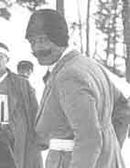
A lot of people think Ski Mountaineering Racing is a fairly new sport, but just because you may not have seen it on TV on the highlight reel everyday, doesn't mean it doesn't have deep routes.  Ski Mountaineering Racing dates way back to the 1920's and 1930's.  Since the 1850's people have been pushing themselves on skis in the mountains, and when people find challenges and begin to overcome them, competition quickly evolves as more people get into the sport and thus Skimo Racing surfaced in around 1910-1915 in small military circles.  (Photo Below:  Military Patrol Shooting Component)

The military used Skimo Racing primarily as a training opportunity, to ensure a strong group of soldiers would be able to patrol the high mountains passes quickly and efficiently to help protect the people, and fell under the guise of "Military Patrols" hence the names of such large races such as the Patrouilles Des Glaciers in Switzerland (Glaciers Patrol).  As these races were usually military exercises, they were run much like the Biathlon in Cross Country skiing, with shooting involved in specific areas and transitions.  Now predating these in the late 1770's, Norwegian's held these Patrol races, however they were based with cross country skiing mostly until they evolved and were discovered by countries with high mountains that required a military presence.  These Patrols were even popular enough, and were recognized for the amount of skill and fitness required, to make it into the 1924 Winter Olympic Games in Chamonix, France.  (Photo Below:  Athletes Ceremony and Swearing In, Chamonix 1924)

As great as it was to have Ski Mountaineering Racing in Chamonix's Olympic Games, it was only designated as a demonstration event, but continued throughout the 1924, 1928, 1936, and 1948 games.  The Chamonix Race was run as a four man Teams race, with Czechoslovakia, France, Italy, Poland, Finland, and Switzerland competing.  In the end, Switzerland took the gold, with Finland in second, France in third,  Italy in fourth, and the other Teams withdrawing due to poor conditions and weather.  The course itself was 30km in distance and approx 500-1200m of elevation gain.  There was a stop halfway through the race to take 18 shots at a target 250m away, with a 30 second penalty if the target was missed and if hit 30 seconds deducted as a reward from their overall ski time.

With the military having fun, and spectators loving the sport, it was time for citizens and the public to begin trying their hand at the sport.  In the 1920's civilians began organizing their first few races.  The more popular races were in Gosau, Austria - the Mairennen (May Race), and the Geierlauf (Vulture Run) in Wattentaler Lizum Austria.  Wattentaler Lizum, remains a military training area that focuses on skimo training and snow exercises for the military today, and two camps sit at 1410m and 1995m respectively.  There were more races popping up all over Europe, and more people taking up the sport.

In the 1930's racing really began to take off.  In 1933 a group of friends who wanted to remember and celebrate a fallen comrade organized the Trofeo Mezzalama race, in memory of Ottorino Mezzalama (Photo Left: wikideep).  It ran from 1933 to 1938 and was designated as a Men's Race, until 1935 when Paula Wiesinger took over for Guisto Gervasutti, wearing his uniform, until she was discovered at a transition and checkpoint mid race.  The 1935 race was even filmed, and titled "Maratona Bianca" or "White Marathon."  The race orginizing slowed from 1938 on, with the local Ski Club Torino running it in 1940 under a different name the Marcia Nazionale Ottorino Mezzalama.  It was not until 1971 until it resurfaced, and run intermittently through 1973, 1975, and again in 1978, but finally run regularly every other year in 1997.  (Video Below:  In Italian, but footage from the 1935 race)

It was in 1975, at the Trofeo Mezzalama, where the first Ski Mountaineering World Championships occured.  33 Civilian Teams competed alongside 12 Mountain Guide Teams and 11 Military Teams.  1975 was also the first time a Female Team competed officially.  (Photo Below:  Mezzalama Racers Today, courtesy of ferrino.it)

Beside the Trofeo Mezzalama, another famous race began to come into play, as the Mezzalama took it's break.  The Patrouilles Des Glaciers, another originally military run race, was started in April 1943 to test the abilities of Switzerlands soldiers.  18 Teams of 3 competed that year, with a large jump in popularity 44 Teams of 3 raced in 1944.  Sadly, the race was put on hold due to World War II, but was restarted soon after on April 10th, 1949 and from their on continued its struggle to survive.  During the race in 1949, a Team from a small town in Switzerland skied into a crevasse and lost their lives while racing, forcing the Federal Military Departmentto ban the race until 1984.  Now running bi-annually (every 2 years), the Patrouilles Des Glaciers remains under Military Control, but is open to all racers and not just the Military.

Alongside these two large giant races is the crowning jewel of Ski Mountaineering Racing, Pierra Menta.  It was started in 1985, and designed as a four day stage race with 10,000m of elevation gain during the four days.  Pierra Menta, along with the Patrouilles Des Glaciers and the Trofeo Mezzalama are combined into the "Grand Three" races, and are the most popular and renowned races out there to this day.

Alongside all these races, there are literally hundreds more, from Night Races at local ski clubs, to larger hard courses such as the Dachstein Extreme.  From 1990 onwards, racing really saw it's largest increase with small events starting locally, and ski clubs building stronger athletes.  Athletes who benefited from these smaller races and ski clubs are now elite members of National Teams and are out dominating the World Cup today.  However, now independant races are now offering large and high end awards for the winners, which has become not only an incentive to build and train stronger athletes, but has also begun to split the sport.

On one side racers competing in the World Cup are competing for their countries, still having some difficulty getting by and affording to race professionally or semi-professionally, and others who may have the speed to dominate the World Cup circuit but are interested in the prize bursaries to sustain themselves financially.  This growth mimics that of Running Races, Adventure Races, and Triathlon/Ironman in that with a growing field of athletes and races, a divide and personal adjenda greatly affects which athletes will compete where.

Races continue to pop up everywhere, from China, Japan, South America, New Zealand, and of course North America.  North America's Ski Mountaineering Circuit is growing extremely quickly, especially with large classic races being organized such as the 5 Peaks race and the Power Of Four race in Colorado.  And why not, to see the growth of the sport with heavy old gear in the 1920's in Europe, the same is going on today but with ultra light and beautifully engineered gear.  People are excited to get out, push themselves, and see how fast they can go in the mountains.
28 March, 2011

Dogtooth Dash Race Report

It was the Dogtooth Dash ski mountaineering race this past weekend, the Canadian Championships, at Kicking Horse Resort in Golden BC.  On Saturday the Individual race, hosting 14.3km and 1560m of climbing, all throughout Kicking Horse's high peaks was the main event.  However, this year a second Relay Race was added as a fun race to cap it all off.  (Photo Below, Start of the Dogtooth Dash Individual, courtesy of Goldenskimo)

The race course was really well designed and set, yet again thanks to Ian Gale (goldenskimo), and brought tons of strong competitors to the event.  The race started off with a bang, with all the competitors racing around the Eagle Eye restaurant at the top of the mountain, in a Le Mans style start (running skis in hand).  Coming out of the transition to the downhill I pulled out front into the lead with the rest of the Canadian Team hot on my heels.  Battling down the downhill with Melanie Bernier and Andrew McNab we transitioned quickly and started climbing.  The race had started well, but at the top of the first climb my first set of skins began to fail, and balancing on top of them was essential to finishing the first climb.  Down the second descent, James Minifie's binding disintegrated forcing him to quit after a nasty bail, and coming into the transition it was just Mel, Ian, McNab, and Reiner.

To my dismay, at only the second uphill transition, my secondary skin was failing before even using it once.  Halfway through it required a change, and so the pattern of skin changing multiple times on the course began.  Trying to hold onto third place, then just fourth, then maybe top five, then even trying to at least finish was a challenge.  My skins were totally and utterly finished, but managed to at least finish thanks to Steve Sellers handing off a pair so I could finish.  Problems from one issue led to others, with a bail mid course, screaming barfies from hands being covered in snow and wet from skin issues, and finally a pole to the knee making bootpacking painful.  It was a devastating race.  (Photo Below:  Melanie Bernier racing hard, courtesy of Goldenskimo)

That being said, Ski Mountaineering Racing is the hardest sport on earth, as there is no recovery, so many aspects to master (gear, technique, transitions, skinning, fitness, strategy, etc....) that when one thing goes wrong it's hard to pull it all together.  So learning from your mistakes and mishaps is vital to progressing in this sport, and yes you too will have problems somewhere down the line, as all racers do.

Problem found, and Lesson Learned:  Colder weather wax will stay on your skis longer and does not get run off the same as a softer warmer wax.  When waxing your skis for skimo racing, make sure you only use a soft warm wax which can be run off to the point where your skis are almost dry again, but still provide the glide and snow repulsion they need to perform properly.  Cold weather wax takes too long to come off the ski, and the plastics injected into it don't allow the glue from your skins to grip to it properly, causing them to un-peal and get contaminated with snow - skin failure.

Overall, fitness was feeling strong which is what is important, and I will be even more ready for the next race and get some redemption.  Congrats to Reiner Thoni (1st), Andrew McNab (2nd) and Ian Gale (3rd), along with the ladies Melanie Bernier (1st), Julie Matteau (2nd), and Billie Velisek (3rd).  Full Results Here.  (Photo Above:  Podiums For The Individual)

(Photo Above:  Relay Course Day 2)  Second day, the Relay, was a blast.  A race to go out, go hard, and have fun which was not for SMCC points.  A fair amount of people where out, dressed in race suits and flower lays, blazers, cowboy hats, and hilarious race team names.  Pro Tele skier and Faction ski rider Martha Burley and I teamed up as Team Fubar, and got out to put in some fast laps.  The relay was a true Canadian Relay, as it was off-piste, and up the side of a steep ridge opposed to the buff World Cup Relays we've been racing on in Europe.  Great fun, and a fantastic event, if you didn't make it this year make it next year!

27 February, 2011

World Championships 2011, Relay Race

The Relay Race, the last race of the World Championships, but one of the most fun all around.  Racers were ready to put the hammer down on this short course format.  The course itself is longer that the Sprint Race, not nearly as long as the Individual Race, but short enough to really hurt.  It had two uphill sections, the first being 150m of vertical gain, and the second being another 150m of gain but with a bootpack.  The descents were marked out with super slalom style gates (turns which were too tight to be a giant slalom), and finished with small skate ski sections. (Photo Below:  Switzerland's Nathalie Etzensperger's run)

The start of the Men's Race was insanely fast, probably one of the fastest starts I have yet to witness, with the top athletes from each country leading out of the gate.  Canada's Reiner Thoni held his own arriving at the first transition with time to spare, a great start, as the coach's from North America were betting on each others Teams to add to the competition.  Yannick Ecoeur of Switzerland held the fastest time of 6:11, which only a few other racers even managed to get close to.  In the end, the Italian's won, and rightfully so as they stacked their Team with the fastest and most specialized, putting in all around fast times.  (Photo Below: David Albos Cavaliere of Andorra on the final climb)

Canada did not have enough women competing this year with Kylee Toth and Billie Velisek unable to attend, however, the USA did have a strong finish.  Nina Silitch, Jari Kirkland, and Janelle Smiley teamed up coming in 7th, with Switzerland taking the gold.  One notable performance was from Laetitia Roux (FR) who finished both laps in only 7:26, the next fastest women's time being Mereia Miro (ESP) at 7:58.  Now with the World Championships over, it's back to Canada to train and get ready for the Canadian Championships, before re-starting the whole process and beginning to train for next year's racing circuit!

Full Results Here.

26 February, 2011

World Championships 2011, Individual Race

It's been a long hard week of racing and focusing on going fast, but the main event was worth it; the Individual Race.  Hosted in Claut, the Individual course consists of 1450m of climbing, and 1750m of descending.  The Course has two bootpacks, one with a down-climb and Via Ferrata section, and finishes with a leg burning 1350m descent. (Photo Below:  Men's Senior Individual Race Start, courtesy of press.areaphoto.it)

The day started out as it usual has this trip, with being shuttled around by local Polizia and Militia/Army personnel to the start areas, except today we were forced to have a 300m warm up climb to the start area (which ended up being perfect).  Everyone was ready for the first of three climbs, which gained around 450m, followed by a short descent.  As the start gun went off the sprint start quickly got going, with one lead racer having a similar gear issue as my Teams race, and three others breaking their poles off the start line.  North American's hung in strong, with no gear failures (other than broken carbon skis, which were still skiable). (Photo Below:  Men's Final Bootpack, courtesy of press.areaphoto.it) 

Keeping a more conservative approach to the race, after the Teams, the pace was still going strong.  Pulling in matching Pete Swenson (USA) who took 2nd in the Patrouilles Des Glaciers last year, lungs were feeling pretty good (even with tasting blood all week from going hard).  North American's were all fairly close, pulling in and doing battle with European racers the whole way through.  Pete got the best of myself and James Minifie on the final descent, but everyone finished really close together. (Photo Below:  Men's Final Transition, courtesy of press.areaphoto.it)

Melanie Bernier made a notable 10th place finish in the women's (which unfortunately had a smaller course).  Overall even with a slightly smaller course, racers could put their foot on the gas and use up the tank a bit faster, which made the course that much more fun.  Now with a fun and good race behind me, finally getting the mental aspect of racing back, it's on for the Canadian Championship in Golden, the Dogtooth Dash!

Full Results Here.

25 February, 2011

World Championships 2011, Sprint Race

Another race done for the Ski Mountaineering World Championships 2011, the Sprint Race.  The Sprint is a fairly new event in Skimo racing, but really encompasses every skill into one lung busting 120m climb, with a fast downhill and skate ski section.  (Photo Below:  Josef Rottmoser during his insanely fast sprint race)

The course start with a 40m climb that is fairly low angle, to a 20m switchback section, into a 20m bootpack, then another 20m climb, transition and downhill into a slightly uphill skate ski.  Transitions, racing, and descending times are always expected at around 3-4 minutes.  The more technical a racer can be the more time he/she can shave off of this short course, but don't forget the mega power endurance that comes from training for specificly for an event like this.  (Video Below:  Sprint Downhill Transition)

The race starts with racers being sent off every 30 seconds, running solo on the course, and trying to hit their top speed for a cutoff for a quarter final round, semi final, and final round devised of six heats.  The best way to describe it would be to do some long intervals, that would have bootpacking, switchbacks and transitions, at your best pace or until you taste blood.  (Photo Below:  Melanie Bernier (CAD) in the Final Heat)

The fastest times were unbelievably fast, as the long distance enduro athletes North America produces, wasn't up to par with the Sprint Specialists that Switzerland, Germany, France, and Spain brought.  That being said, Canada's Melanie Bernier was the exception (again).  Mel, came blasting out of the start gate, making it into the Semi Finals right off the bat.  In the Semi's she then led out of the start, resting slightly on the bootpack, but then tearing by the rest of the women in the transition gaining three positions putting her into the Final Heat.  In the Final heat, she started out strong, but when the Women who had been training specifically for this event put on the gas she just missed a high level finish.  Coming in at 5th, is the best result for North America at a World Championships ever (which was recently broken yesterday at the Vertical by Janelle Smiley placing 7th).  A strong race for Mel, and another step up for North America!

22 February, 2011

World Championships 2011, Vertical Race

Today was the Vertical Race, here in Italy, which was held in the Piacavello ski area.  Every Country that was attending was out going after the highest position possible, and North American's were no different.  Both the Canadian and US Team dropped the hammer to wreck themselves on what was possibly one of the most technical Vertical races I've seen.  (Photo Below:  Junior Females start)

The course itself starts off in a nice flat area, the hill it runs up slowly get steeper and steeper until it tops out in the clouds.  In the center of the course, there is a technical skinning section full of switchbacks that would require good strategy, and also a bootpack which racers were forced to transition at the bottom and top of.  The bootpack is what made and broke some racers, but everyone wasn't expecting how fast they would top out, as the course was a mere 540m of elevation gain.  Typically, a World Cup sanctioned Vertical race would be somewhere in the range of 1100m, but today was a bit different due to poor weather conditions.  (Photo Left:  Junior Women's Leader Axelle Mollaret (FR) on the bootpack)


The Senior Women's race started off hard, with Canada's Melanie Bernier leading the entire course for the first section of the climb.  A neck and neck race overall, but in the end Meira Miro (ESP) pulled up front and put a big gap on the others, with Laetitia Roux (FR) on her heals.  The gap was fairly large up front, but after third position came the battle was on.  A huge congradulations to Janelle Smiley from the USA placing 7th, Melanie Bernier finishing 15th, and Julie Matteau finishing 23rd.  (Photo Right:  Melanie Bernier (CAD) finishing the last 100m stretch)

The Senior Men's race was extremely intense.  Yannick Buffet (FR) led the race nearly the entire way, with Killian Jornet Burgada (ESP) on his heels, until the top where Killian hit the gas just edging out Buffet at the end.  An incredibly high paced race, the Canadian's finished with Reiner Thoni 34th, Andrew McNabb 41st, Stano Faban 53rd, and Steve Sellers 61st.  The USA's ringer to the vertical race was Greg Ruckman finishing an incredible race at 14th, congrats Greg!  (Photo Below:  Canada's Reiner Thoni on the last 100m of the Vertical Race)

Overall, the race was a huge success, although the visibility could have been better (all part of ski mountaineering).  While looking back on last year's performances, the overall consensus, is that North America is quickly catching up to the European's, and we are quickly building a strong contigency to wage war on the World Cup.  Tommorrow will be the Sprint race, a new format to the Ski Mountaineering World Cup.

Full Results Here.

21 February, 2011

World Championships Teams Race Recap - The Hurt

Yesterday, on the 20th of February, was the Teams race for the World Championships.  Feeling good, and ready, everyone was ready for a strong performance against the best of the best.  What came is a large expansion of the pain box, extending it further than I have personally ever gone, and continued to feel even after the race was over.  The race was a realization of the high's racing can provide, and the deep low's, that make the high's worth the pain, the suffering, and hard experiences worth the sacrifice.  (Photo Right:  Teams Profile)

20 February, 2011

First Few Days at SkiMo World Championships 2011, Claut Italy

After driving, flying, transfers, more flying, and more driving I finally reached our hotel which would be the HQ for the Canadian, USA, and Swiss Teams in Barcis Italy.  Just down the road from Claut, Barcis is a very small rustic town, with nearly nothing in the way of technology but with a lot of traditional Italian life.  (Photo Below:  Barcis, Italy)

The first few days of the trip, once arriving, the Canadian Team (along with the Americans) has been to get a lay of the land and courses while keeping fresh for the upcoming races.  The Dolomites have not had a large amount of snow this year, and as a result the course setters have been especially challenged when setting a course, even with a good snowfall on our arrival.  As we explored, and found the areas where the races are being held, the race officials have juggled the dates of the schedule around making it hard to judge when to train and rest.

The weather (now sunny), which has improved considerably since our arrival, has been giving us a great view of the surrounding mountainside.  Huge vertical alpine faces, with major relief, surround the small towns in the bottom of tight little valleys.  The major difference that Claut has from all other venues, is that races start at a low elevation (usually around 410m) and climb through the trees for a long period of time, before reaching the alpine which has some serious terrain.  While racing Pierra Menta last year, I thought we raced through some serious terrain, but after seeing this place; the potential is huge for truly outrageous race courses.  (Photo Below:  The "little" mountains outside Claut)

Now equipped with new race suits, backpacks, and headbands from Crazy Idea {hyperlink} everyone on the Canadian Team is stoked to get after some racing.  First race is the Teams race on Sunday Feb 20th, 2011.  Men's Teams will be 1.  Reiner Thoni and Andrew McNabb, 2.  James Minifie and Alex Wigley, 3.  Stano Faban and Steve Sellers.  The Women's Team will be Melanie Bernier and Julie Matteau.  But before racing the Opening Ceremonies, a parade and ice show, followed by lots of speaches from various sports presidents and officials.  (Photo Below:  Team Canada in their slot during the Opening Ceremonies)

06 February, 2011

Sunshine 5000 Ski Mountaineering Race

Another Ski Mountaineering Competition Canada Race done, the Sunshine 5000 (Banff, AB), and one more race closer to the World Championships in Italy this month.   So after a long drive, a lot of coffee, and a large amount of snow on the roads; I found myself at the start-line along with the rest of the Canadian Skimo Team, and a number of other ready to suffer racers.

This year the course was a bit longer (pictured above), actually making it a bit more like the Sunshine 6000, but with great weather and perfect conditions everyone was up for it all.  The course starts with a long but flat ascent, to burn the legs, and maintain a high cadence.  Overall, the course had four ascents, and four descents including a downhill finish.

Blasting out of the start gate, the usual sprint to setup and position yourself, was fun (Photo Above, courtesy of Lynn Martel).  Everyone slipped into a tight peloton, leading was Reiner Thoni, and the rest of the Canadian Team chomping at the bit behind him.  Within the first 5 minutes, there was a breakaway from the peloton of skimo racers, five of us managed to put the gas on and slip ahead.  We battled for position moving forward and back with everyone feeling strong.  I nudged into 3rd slot and the breakaway started to spread out.  That was until the first descent.  With a poorly marked descent Ian Gale (Goldenskimo), James Minifie, and myself headed off course luckily regaining the course but were caught up with by Stano Faban (skintrack.com).

On the battle went, a short climb, and another transition.  This time I was the unlucky one to ski far off course, losing my 3rd place position, and watching Ian and James take over while heading the totally opposite direction.  Frantically, polling through the deep snow, finally regaining the transition point after going fully anaerobic working to get back I managed to transition fast enough to regain pursuit.  Slowly realing them in, working hard to regain my time, I caught up.  But without a moment to lose, the attacks on the course came, and there was no rest to be had.  (Photo Left:  Andrew McNabb and chase behind him.  Courtesy of Lynn Martel)

By the last lap, with considerable back and forth battling, James, Ian, Stano, and I had begun closing the gap between us and Andrew McNabb who was currently in second.  The battle continued through the switchbacks, and bootpack, with a painful skin to the transition line.  Stripping skins quickly, and straightlining some chutes, down the mountain we all arrived within a very short amount of time.  Dissapointed with the two detours which cost a fair amount of time, I still thought, that this was the most fun I have had racing in Canada.  (Photo Below:  Ian Gale, Alex Wigley, and James Minifie at the last transition down, a close race and 50 second spread!  Photo courtesy of Lynn Martel)  

Other great performances came from Melanie Bernier (CAD Team), the first place finisher in the female category, blazing across the course unbelievably fast as usual.  Brad Schalles also giving current Canadian Team members someone else to look out for, finishing with a great time as well.  Times were fast this year, for everyone.  Really fast.  It was a great turn out, with lots of serious racers, as well as many giving it a shot to test their limits.  We couldn't have asked for better weather and snow conditions.  A great day of racing behind us, back to Golden for a quick post-race dinner and get-together, everyone is stoked for more.  (Photo Above Right:  (L to R) Alex Wigley 4th, Andrew McNabb 2nd, Reiner Thoni 1st, and James Minifie 3rd, Below Right: (L to R) Martha Burley 4th, Julie Matteau 2nd, Melanie Bernier 1st, and Billie Velisek 3rd)

Full Results HERE.

29 November, 2010

Vert 180 Ski Mountaineering Race Report

The first race of the Canadian Ski Mountaineering Cup, just took place in Calgary Olympic Park in Alberta this past Saturday, The Vert 180.  Heading out to Golden, Friday evening, was epic.  A snowstorm had crippled BC highways, encounters with rockfall on the Coquihalla highway, fishtailing 18 wheel trucks inside tunnels on Rogers Pass, and getting stopped by the Police made the first day of driving a bit too long.  But it was all worth it to get out racing again.
(Photo Above:  Start line, ready to drop the hammer, photo: Ian Gale)

Kylee Ohler, of the Canadian Skimo Team, was the driving force behind this race.  She did a fantastic job, organizing great prizes, DJ's, the course, and everything to make it a great race.  Showing up, we had an idea it was going to be a big turn out, but were suprised when the lines became too big to handle the pre-race registration desk!  The Canadian Ski Mountaineering Team was out, taking on the three different categories, Solo, 2 person team, and 3/4 person teams.  
I had decided to race in the Men's Solo category, and only having had an hour and a half on my skis a week before, was interested to see where I was starting off the season.  Painfully, I learned this lesson, spending the entire 180 minutes living inside my "pain cave."  Watching Steve Sellers and Ian Gale, the winning 2 person team, fire out of the gate after each relay and having the chance to rest I pondered my choice of visiting my pain cave.  (Photo Left:  Racers getting ready for the start, photo:  Ian Gale)

Getting into the pacing, and focusing on transitions in the cold weather, was key to keep going.  Skins were failing, backups failing, and water froze.  Competitors were aching, but still having a great time racing over the lights of Calgary below.  In the end, Reiner Thoni took the first place in the Men's Solo, followed by Andrew McNab, then myself.  Melanie Bernier, was out giving it everything, and took the Women's Solo title, and even 3rd overall!  Everyone was out really pumping out the vert, and we were all pretty pumped to see a good number of juniors getting into the sport, as well as new dedicated racers to the sport.  
(Photo Above:  The starting group, Photo:  Ian Gale)
Now with lots of race data from my Suunto T6d and GPS pod, I am looking forward to adjusting my training to the next race on the schedule.  You can check out all that data, here on Movescount.  Some racers are going to be racing the Selkirk Classic at Golden Alpine Holidays, but the next National Circuit points race will be the double feature at Kicking Horse Resort in Golden, the Tiki Torch Dash.  A big thanks to everyone who's been helping out this year, Plum, Whistler Blackcomb, The Escape Route, and Suunto, stoked for more racing!  Full Results Here.

16 October, 2010

Canadian Ski Mountaineering Race Schedule

Alright here's the moment you've all been waiting for, the Canadian Ski Mountaineering Race schedule.  Racers should note that the Lake Louise and Sun Peaks races have yet to be fully confirmed, and that the dates may change, so stay tuned.  Races marked * do not count towards the Canadian Rankings and point system, as they are limited to fewer participants due to their remote setting, and heli-access.  (Photo Below:  2010 Canadian Dogtooth Dash Championships, courtesy of goldenskimo)

1.  Vert 180 - November 27, 2010
COP, Calgary, AB

2.  *Selkirk Classic - December 4-5th, 2010
Golden Alpine Holidays, Golden, BC

3.  Tiki Torch Dash - January 15th, 2011
Kicking Horse Resort, Golden, BC

4.  Sunshine 5000 - February 5th, 2011
Sunshine, Banff, AB

5.  World Championships - February 17-25th, 2011
Claut, Italy

6.  ROAM Randonee Rally - February 26th, 2011
Whitewater, Nelson, BC

7.  Canadian National Championships "The Dogtooth Dash" - March 26-27th, 2011
Kicking Horse Resort, Golden, BC

8.  Sun Peaks Race - April 2nd, 2011
Sun Peaks Resort, Kamloops, BC

9.  Lake Louise Race - April 10th, 2011
Lake Louise, Banff, AB

10.  *Esplanade Epic - April 16-17th, 2011
Golden Alpine Holidays, Golden, BC

The American Schedule is looking pretty packed as well and can be viewed here. Expect bigger and more diverse races and course styles, this year is going to be a good one, both here at home, continental, and internationally.  See you on the start line.  Register for the season or any race HERE.

04 October, 2010

Vert 180 Ski Mountaineering Race Announced

First ski mountaineering race of the Canadian Circuit has been announced, and it's brand spanking new to the circuit!  The Vert 180 Ski Mountaineering Race is the idea of Team Canada member Kylee Toth.  It is taking place at Canada Olympic Park in Calgary Alberta on Saturday November 27, 2010 @ 5:30pm.  This means a second night race in Canada, the other being the Tiki Torch Dash in Golden BC, although this one will be spectacularly lit by the night ski light of COP.  But this race is a bit different than other skimo races, and mimics the 24 Hours of Sunlight (now 12 hours of sunlight), but in a "sprint" format of 180 minutes (3 hours). 

Racers will be pushing their limits extremely hard in this format, as their will be little rest for those who are looking to stack up serious amounts of vert in such a short amount of time, and the name of the game is vertical.  Much like 24 Hours of Sunlight, racers can compete Solo, as a 2 person or 4 person team, to squeeze in as much vertical as possible in 180 minutes.  This is a great opportunity for people to come out and try racing for the first time, a new or different challenge, off-season training, or to check out the Canadian Team drooling from being anaerobic for too long.  So if you want to have a great time, and are interested with how much vert you can pump out in 3 hours, come on out and suffer with the rest of us.

Quick Facts:
Date:  November 27, 2010
Time:  Race starts @ 5:30pm and finishes @ 8:30pm
Where:  COP, Calgary, AB
Format:  Solo, 2-person or 4-person Team
Race:  Max Vertical Race
Cost:  $40.00
Register Here or at the Race.

27 September, 2010

Rubble Creek Classic Race Report

6 am, dark still, raining hard, and race day.  We had 30mm of rain overnight, and after finishing a quick cup of coffee with breakfast, I jumped in the car to go pick up my neighbour and fellow racer Dave Booth.  Driving down the highway to go drop a car off at the finish line of the race, it seemed like we were in for what was to be expected, a day of misery.

16 August, 2010

2011 Upcoming Racing News

Well it looks like the 2010/2011 Winter Ski Mountaineering season is shaping up to be a really good one.  Here in North America there are an explosion of races being created and organized, and some unique events as well, some beginning to take on more momentum and becoming 'classics'. 
On the Canadian side of racing, expect to see a larger National circuit, but you should also know that Golden Alpine Holidays will be returning to host the Esplanade Epic (featured above).  The Esplanade, was and is an entirely heli in and out, backcountry ski mountaineering race.   Except instead of the mass start, GAH hosts the one and only time trial event, where racers take off alone and against only the clock.  The event will be returning this year on April 9th (weather depending).  But for those who can't wait to race, GAH will be hosting a second event, the Selkirk Classic Season Opener on December 5th.  Both races are $275.00 to enter.  Now there are other events, which will be announced shortly for Canada & the US, but expect a busy winter.

February 11-19th is the ISMF World Championships in Claut Italy.  Team Canada is currently preparing, with upcoming training camps, for another big step forward in the World Cup results.  It will interest people to know that the World Championships have been changed from the 2012 season to the 2011 season to ensure that it does not occur at the same time as the Olympics, gearing up for ski mountaineering to be an Olympic sport in 2018.  The entire World Cup schedule can be found here.    

18 May, 2010

Blackcomb To Black's Cancelled

Yeah that's right, you read it correctly, the Blackcomb To Black's race will be cancelled for this year.  Currently the weather forecast is looking unbelievably poor for the weekend, and to add to this, the snow conditions and temperatures have been working against us.  So in the name of safety we will be cancelling this race, but will make sure to make it happen next year.  Thanks to all the participants who have signed up, we'll see you out in the mountains in the next few weeks!  (Photo Right:  Matt Francis Skiing Away from the North Face of Mt Fitzsimmons.)

05 May, 2010

Blackcomb To Black's - The Unsanctioned Spearhead Traverse Race

Every year, a group of skiers get together to go race around the Spearhead Traverse, regardless of the fact that the race has not been sanctioned or sponsored, even really organized by an official body of some sort.  The need and want for a race through this amount of unbelievable terrain is so strong, it exists purely out of the enthusiasm and stoke of all those who come and do it.  This year is no exception.  Saturday, May 22nd, Blackcomb To Black's is back!  B2B's has been happening for a long time, and hasn't ever been missed, more than a decade!  Always underground, unsanctioned, and a classic backcountry ski bums event. Hopefully one day, we'll see this race become realized and be an ISMF ski mountaineering event.

Pre-Race Meeting is at Christines on Blackcomb, from there the race will begin around 11:00 at the Boundary Gates off the Blackcomb Glacier, and ending at Black's Pub.  The race is free, and designed as a fun race, but we do know that records are meant to be broken, and limits are made to be pushed, so its your choice!  Please understand that this is a race through real backcountry glaciated terrain, there are serious hazards such as avalanches, cornice fall, crevasses, and cliffs, come prepared with all the mandatory gear.  You may race solo, or as a Team with friends, and know that everyone can finish this traverse in a day before heading out!
(Photo Above:  The back of the Spearhead Range)
Route and Rule Info
1.  The route will follow the standard Spearhead Traverse route shown on John Baldwin's Backcountry Whistler Map, and racers will abide by this route for safety reasons.  It does not go down Singing Pass but out to Flute and down Whistler mountain to Black's Pub.  Exact route information will be given on race morning
2.  Mandatory equipment is mandatory.
3.  No short cuts on the route.
4.  If a fellow racer/team is in need of help, you must help them.

Mandatory Equipment
Avalanche Gear:  A real shovel (no snow claws), probe (min 240cm), Avalanche Beacon
Harness
Down or Insulated Jacket
Food/Water
Headlamp
Firestarter
*Tarp (bivy sack will suffice) - a space blanket will work, but we do encourage something REAL
*Crevasse Rescue Gear and 30m rope
*First Aid
*Communication:  Either cellphone, radio, or sat phone
*Map and Compass/GPS
Note:  Items with an * can be divided only if racing as a team.  If you are missing an item, please rent or borrow, or join up with a team that does, otherwise you cannot come out!'


Please RSVP at the Escape Route, or email alex@escaperoute.ca for your place.

04 April, 2010

Canadian Championships - The Dogtooth Dash Race


This weekend Kicking Horse Resort, in Golden BC, hosted the 2nd annual Dogtooth Dash Ski Mountaineering race.  The last race on the Canadian calendar this year, and the Canadian National Championships, made it the race everyone was looking to do well in.  The course itself was almost exactly the same, but did have a 250-300m longer climb, to make sure the times weren't too quick.

The event was a success as usual.  Kicking Horse held a pre-race dinner during the race meeting, and also an apres ski during the awards after the race.  The Canadian Team was there ready to go, and pumped to race again, since nobody has had the chance to race while being back in North America.  

The course started out with a classic Le Mans style start, everyone running around the Eagles Eye Restaurant before clicking into their skis, and blasting down to the first transition.  From there, a quick transition, the Canadian Team seperated from everyone else, pulling out front.  Reiner Thoni, James Minifie, and myself were out front with Ian Gale and Jeff Colvin right on our heels.  At the top of the first climb hitting the transition, everyone arriving nearly at the same time, we dropped down a steep chute with great snow, and held it together to the next ascent.

Melanie Bernier was on fire again this race, up front, and battling it out with James Minifie and myself.  We continued winding our way through the 2nd ascent, and down the giant mogul field descent, to our 3rd and longest climb.  Hammering up, we discovered the Jeff Colvin had bailed, and was forced to pull out due to a head injury.  A good reason to pull out, but we felt bad, as Jeff was passing a lot of people and really moving fast.  He is okay now in case your wondering.
(Photo Above:  Terminator Peak bootpack)
Arriving at the bootpack, feeling trained up to climb since Pierra Menta, but still feeling the lungs on the climb.  We continued up, racing through the start/finish area, to drop back down into Terminator Peaks section of the Course.  Moving fast, getting through the flat sections to the switchbacks, we were bootpacking again before long.  All the way to Terminator, trying to stay close to the redline, but unsuccesfully, and over it, continued through to the sketchy ridge descent, and into a great little chute.  

The last ascent was hard.  Retracing the 2nd last we had just done, hitting the bootpack and vearing right to the finish line, the red line and anaerobic threshold well below me, came across the finish line in 4th.  A hard race, and yes World Cup races are hard, but this race does live up to it.  Reiner and Mel, took the overall Canadian Championships title for the 2010 season, wrapping the Canadian Circuit up.  (Photo Left:  Reiner and Mel the Canadian Champions)

Now with the racing season over, Team Canada had our end of season BBQ and Team meeting, some people going on to race the Esplanade Epic, and others including myself are concentrating on some ski mountaineering objectives.  A great end of season race, and a great way to suffer.  (Photo Right:  Billie Velisek the BBQ master)

Ski Theory would also like to send Martha Burly, who was out getting her racing gear and strategy sorted at the Dogtooth, good luck in the Patrouille Des Glaciers in Switzerland which will be happening in a few weeks!

Results here.
More video here.  

21 March, 2010

Kicking Horse Dogtooth Dash

I'm back from Europe, and so pumped on racing.  Luckily the Canadian Ski Mountaineering Championships, the Dogtooth Dash, is right around the corner.  On April 3rd, Kicking Horse Resort, is hosting this fantastic event.  One of Canada's most savage and well thought out courses, the Dogtooth is built as a "four leaf clover" type loop, and caters to not only racers but spectators as well.

The course itself starts with a sprint around the Eagle Eye Restaurant, then an insane all out battle downhill to the first transition, all within the first two minutes of the course.  This year the course should be longer and hold more elevation gain and loss.  After the race, Kicking Horse has a great apres and meal at the Eagle Eye Restaurant.  All of this easily worth the race entry fee, so come out to Golden, BC, and check out this amazing race!

Cost - $70.00 for both Race and Recreational Categories
Sign up here!

15 March, 2010

Pierra Menta Stage 4

Stage 4 of Pierra Menta, the shortest, but fastest pace one.  The past three stages where all just shy of 3000m of elevation gain and loss, Stage 4 was only 1629m, made for going all out and fast on.  The course consisted of three climbs.  (Photo Right:  Stage 4 Start.  Credit;  Jocelyn Chavy)

The first one, 1153m, which forced everyone to start out as aggressively and as hard as they could in order to have a good position for the bootpack that was only 400m or so ahead.  The competition was fierce, with everyone vying for the best position, and really trying to sprint into any space that was long enough to fit a pair of skis in.  It continued up, switchbacks, and steep skintracks to Passage Du Dard (2342m).  A really fast transition, and a slight recovery from the fast paced long up, down a wide opened bowl full of extremely variable snow.

The second climb, started out steep, then moved into a series of switchbacks to a long bootpack to the top of Pointe Du Dard (2489m).  The bootpack was a classic Pierra Menta style ridge, right up a big exposure, with lots of snow to rock, to grass, and a run across the summit to the next transition.  Burning as hard as we could, we moved past the transition, gaining a few positions and on to the leg burning descent.  The course dropped through big gullies, wind blown and breakable crust sections, and big blind rollovers.  (Photo Left:  Top of the first ascent.  Credit:  Jocelyn Chavy)

Nearly finished, we hammered the last ascent, as series of short switchbacks to the transition only 58m up.  After a blisteringly fast transition we careened through the forest, full of massive rollers, creek beds, and unbelievably painful leg burning hard turns to an icy access road.  Flying down big 180 degree corners with burms on them, we continued pushing, knowing Canadians Melanie Bernier and Andrew McNab were hot on our heels.  A photo finish with two other teams, we finished 58th, and the finally out the four days the first Canadian Team across the line.

Team Canada continued to come in fast, and all finished really close together.  Overall rankings, were Melanie Bernier/Andrew McNab 67th, Alex Wigley/Stano Faban 76th, Reiner Thoni/Billie Velisek 109th, and Jeff Colvin/Julie Matteau 116th.  A big congrats to our Team USA friends Brandon French and Ben Parsons, who finished Stage 4 in 28th, and 36th overall.  Kilian Jornet and Florent Troillet took the overall title, and in the womens Francesca Martinelli and Roberta Pedranzini.  Everyone has been really happy with the race, the experiences, and everything we learned.  Heading back to Canada now, everyone is looking forward to training more, and improving results for next year.  The next race around the corner is the Dogtooth Dash, in Golden, April 4th.  (Photo Above Right:  Stage 4 finish line.  Credit:  Jocelyn Chavy)  Check out Skimo Stoke for a great recap of Stage 2, here.